
Aluminum Strip For Transformer Winding Price
2026-08-20
Having worked in the export of electrical grade aluminum materials for many years, I've encountered numerous overseas purchasing clients. The most common misconception is directly comparing the price of ordinary industrial aluminum strip with that of transformer winding aluminum strip, believing the latter's price to be inflated. In fact, while both appear to be aluminum strip product, their raw material standards, process control, and quality control requirements are completely different.
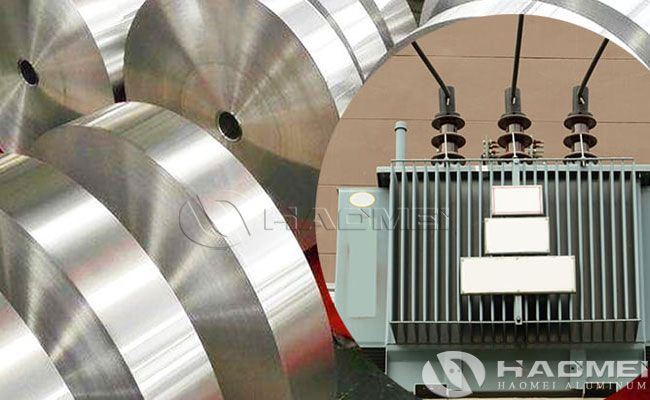
The pricing logic for all aluminum processing products is "LME aluminum ingot benchmark price + processing fee," and transformer aluminum strip is no exception. As of mid-August 2026, the LME spot aluminum price fluctuated around $3,200/ton, which is the globally recognized bulk transaction cost of primary aluminum ingots and the price anchor for all deep-processed aluminum products. Ordinary civilian-grade aluminum strip only requires simple cold rolling and slitting, with processing fees typically only $300-$500 per ton, and the finished product price close to the aluminum ingot benchmark. However, transformer winding aluminum strip is an electrical-grade high-precision material with a long processing chain and high quality control thresholds, resulting in a processing premium far exceeding that of ordinary products. This is the core reason why qualified export-grade products generally exceed $4,000 per ton.
Specifically, the processing fee premium for transformer aluminum strip mainly comes from four key processes.
First is electrical-grade smelting and purification. Winding aluminum strip requires strict control of impurities such as iron, silicon, and vanadium that affect conductivity. Grade 1350 also requires boronizing refining, which alone increases the cost by nearly $200 per ton compared to ordinary pure aluminum.
Second is protective atmosphere bright annealing. To achieve uniform O temper softness throughout the coil and completely eliminate residual stress, recrystallization must be completed in a segmented temperature-controlled environment under inert gas conditions. The equipment energy consumption and time costs are more than twice that of ordinary annealing.
Thirdly, precision slitting and edge grinding are crucial. Transformer aluminum strip requires micron-level thickness tolerances and burr-free edges and sharp corners. Specialized edge trimming processes reduce yield and increase labor costs.
Finally, there's comprehensive testing throughout the entire process. Each roll must be tested for conductivity, hardness, dimensional accuracy, and surface defects, accompanied by complete material certificates. Quality control costs are significantly higher than for ordinary industrial materials. In summary, the processing fee for high-quality transformer aluminum strip is generally between $800 and $1200 per ton. Adding the benchmark price of aluminum ingots, the ex-factory price approaches $4000 per ton.
In addition, there are several easily overlooked costs in export scenarios. Export-specific moisture-proof vacuum packaging and wooden pallet reinforcement account for approximately $50 to $80 per ton; commodity inspection, certificates of origin, and third-party testing and certification fees for different destinations, after being spread out, amount to tens of dollars per ton; under FOB terms, port handling and port charges must also be added. If customers require large roll customization, special width slitting, or small-batch trial orders, changeover losses will further increase unit costs, with a 5% to 10% price increase being common in the industry.
From an industry perspective, I firmly believe that $4,200/ton is a reasonable quality threshold for export-grade transformer aluminum strip. While there are lower-priced products on the market, they often use ordinary industrial aluminum masquerading as electrical grade, with inadequate annealing processes, omitted edge treatment, or simplified testing procedures. Using such materials in windings can lead to low winding yield and excessive partial discharge, or even long-term operational failures, with rework and maintenance costs far exceeding the material price difference.
For transformer manufacturers, procurement decisions should not only focus on the price per ton but also consider the overall cost of use. Haomei Aluminum supplies transformer aluminum strip that strictly adheres to electrical grade standards, with full-process quality traceability. It boasts a stable price advantage within its quality tier, helping customers optimize procurement costs while ensuring winding quality. Ultimately, procuring transformer aluminum strip is essentially paying for reliability; a clear understanding of price structure is key to balancing cost and quality.