
Aluminum VS Copper Windings in Transformers
2026-07-17
As the core component for electromagnetic energy conversion in transformers, the material selection of the winding directly determines the energy efficiency, mechanical reliability, and life-cycle cost of the equipment. Copper windings and aluminum windings are two major parallel technologies in the industry. They are not simply a matter of superiority or inferiority, but rather a result of engineering trade-offs based on different application scenarios. A comparison requires a comprehensive evaluation from multiple dimensions, including loss characteristics, mechanical performance, process adaptability, and overall economic efficiency.
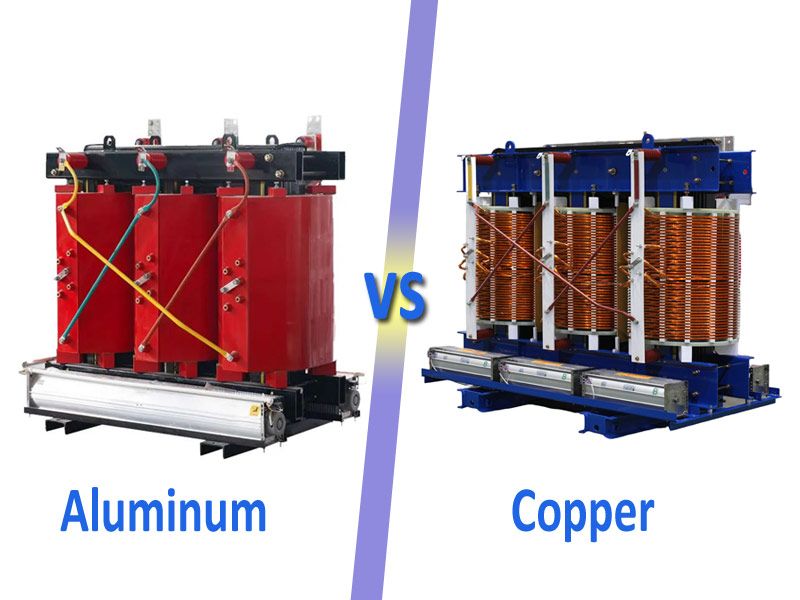
From the perspective of loss characteristics and energy efficiency, the advantages of copper windings are concentrated on the load loss side. Copper's resistivity is only about 60% of aluminum's. Under the same cross-section and number of turns, copper windings have significantly lower DC resistance losses, and the energy-saving benefits are more significant under higher load conditions. For S13, S15, and higher series power transformers with high energy efficiency requirements, copper windings are more likely to meet low-loss design specifications, resulting in significant long-term electricity cost savings. While aluminum windings have a higher resistivity, the loss level can be controlled by appropriately increasing the conductor cross-sectional area. In distribution scenarios with lower load rates, their energy efficiency performance can also meet the standard requirements.
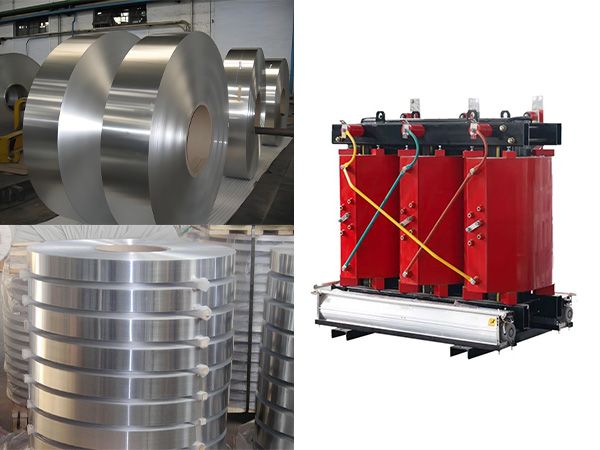
In terms of mechanical strength and short-circuit withstand capability, copper windings outperform aluminum. Copper has higher tensile strength and elastic modulus than aluminum, allowing it to withstand electrodynamic forces of several tons when subjected to sudden short-circuit current surges. Copper windings also exhibit stronger resistance to deformation, making them less prone to winding deformation and inter-turn displacement. Meanwhile, aluminum's coefficient of thermal expansion is about 40% higher than copper's. Under long-term temperature cycling, the difference in thermal expansion and contraction between the winding and insulation structure is greater, making insulation loosening and displacement more likely, thus requiring higher standards for structural design and process control. However, with the widespread adoption of foil winding technology, aluminum foil windings have significantly improved their short-circuit withstand capability through overall structural optimization.
From a manufacturing perspective, both types of windings present their own challenges. Copper windings have good material ductility, resulting in smooth winding and stable, reliable copper welds. The brazing process for copper wire windings is particularly mature, with low joint resistance and a low failure rate. However, copper's higher hardness necessitates higher equipment tonnage when winding large-section windings. Aluminum windings present challenges in oxide film welding. Both aluminum wire and foil require specialized ultrasonic welding or argon arc welding processes, demanding strict quality control of the joints. Improper process control can easily lead to excessively high contact resistance and localized overheating.
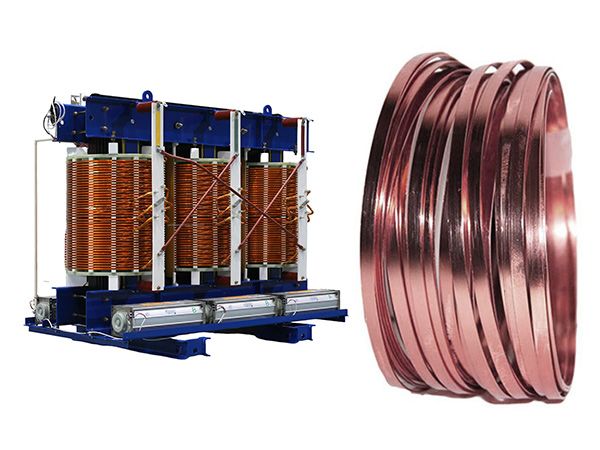
As a professional exporter of transformer conductive materials, Haomei Aluminum offers both C11000 soft-annealed copper foil and 1060 aluminum foil. Both materials undergo precision annealing and trimming, with dimensional tolerances controlled at the micron level and no burrs or sharp corners. They are directly compatible with high-speed foil winding production lines, effectively reducing the manufacturing difficulty and defect rate for customers. The products conform to ASTM international standards and support customized slitting and large-coil supply, meeting the winding design requirements of transformers with different capacities and structures.
From a life-cycle economic perspective, copper windings have higher initial installation costs but lower operating losses, making them suitable for high-load, long-running scenarios. Aluminum windings offer a significant material cost advantage, reducing the overall transformer cost by 15% to 25%, making them particularly cost-effective in medium- and low-voltage power distribution and temporary power supply scenarios. The actual selection needs to be based on a comprehensive judgment of the project's energy efficiency requirements, investment payback period, and operating load characteristics. There is no absolute technological gap between the two; the key is to match the core requirements of the specific application scenario.