
Electrical Grade Aluminum Strip For Transformer Winding
2026-05-07
As a technician at Haomei Aluminum with ten years of experience in transformer aluminum strip production, I deeply understand the core role of electrical grade aluminum strip in power equipment. As the "heart" of the power grid, the choice of winding materials for transformers directly affects equipment efficiency, lifespan, and safety. In our production, we consistently adhere to the principle of "equal emphasis on conductivity and mechanical reliability." Today, I'll discuss from a technical perspective how to select the appropriate electrical grade aluminum strip for transformers.
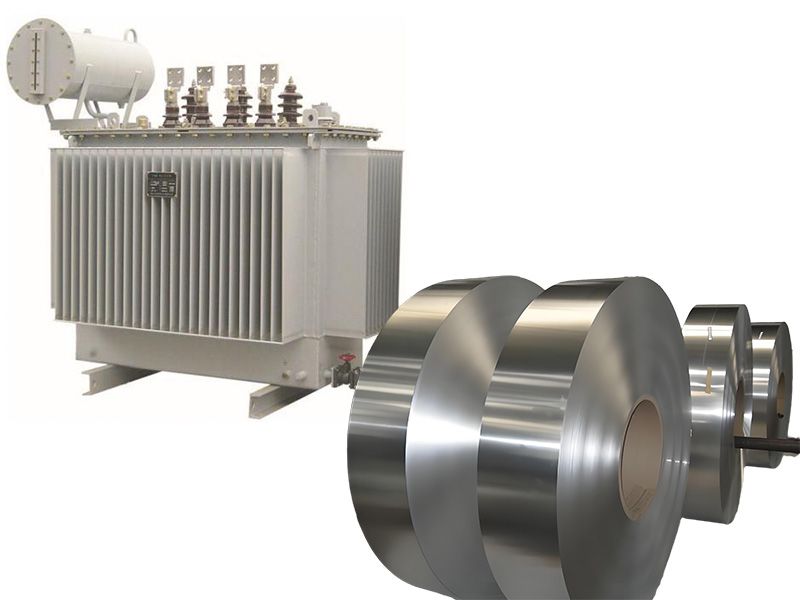
The core value of electrical grade aluminum strip lies in balancing conductivity, mechanical strength, and cost-effectiveness. Our mainstream choice is 1060-O pure aluminum strip, with an aluminum content ≥99.6%, a stable conductivity of 61.0%-61.5% IACS, and a thermal conductivity of 238 W/(m·K), fully meeting the electrical requirements of dry-type and oil-immersed transformers. For some special operating conditions, 1050 (cost-optimized) or 1350 (ultra-high purity) are selected, while 3003 alloy is used in high-humidity outdoor environments, and its manganese content enhances corrosion resistance.
Thickness control is the lifeline of transformer aluminum strip. We achieve a thickness tolerance of ±0.01mm using a four-roll reversible cold rolling mill, which is crucial for reducing eddy current losses. Our standard product thickness ranges from 0.2-3.0mm, with 0.3-0.8mm used for low-voltage windings of dry type transformers and 1.0-2.5mm suitable for high-voltage windings of oil-immersed transformers. In terms of width, we can customize any specification from 10-1600mm. The edges are precision slitting and in-line chamfering to ensure burr-free, rounded transitions, preventing insulation paper damage and partial discharge risks from the outset.
The annealing process determines the final performance of the aluminum strip. We use a continuous bright annealing furnace, precisely controlling the holding temperature of 340-360℃ and the holding time of 12 hours to ensure that the tensile strength of the O soft aluminum strip is stable at 75-105MPa and the elongation is ≥25%. Aluminum strip in this state exhibits excellent winding and forming properties, allowing for a tight fit to the core and reducing the likelihood of cracking during high-speed winding. It also meets the fatigue strength requirements for long-term transformer operation.
Surface quality directly affects insulation performance. We implement stricter pinhole control than industry standards, with ≤3 pinholes per square meter and a maximum diameter ≤0.3mm, preventing insulation breakdown caused by localized electric field concentration. Surface roughness Ra is controlled at ≤0.2μm, ensuring good adhesion to the insulation material, reducing interfacial thermal resistance, and improving heat dissipation efficiency.
Regarding the "aluminum replacing copper" issue that customers are most concerned about, I have actual data to support my assessment. A transformer manufacturer reduced raw material costs by 62% and overall weight by 48% after replacing copper strip with our 1060 aluminum strip. Simultaneously, through optimized cross-sectional design (increasing the cross-sectional area by 1.6 times), the loss level became comparable to that of copper windings. We have also solved the industry pain point of aluminum strip connections by providing pre-tin plating, reducing joint contact resistance by 90% and avoiding the overheating problem common in early aluminum transformers.
In quality control, we have established a "three-inspection system": raw material spectral analysis to ensure chemical composition meets standards; conductivity and mechanical properties are tested for each roll during production; and eddy current testing and edge quality inspection are conducted at the finished product stage. All products comply with international and domestic standards such as IEC 60851-3, ASTM B231, and YS/T 713-2009.
As a technician, I firmly believe that good products are not only designed but also manufactured. Haomei Aluminum's electrical-grade aluminum strips not only provide technical parameters but also application solutions. We can customize material solutions according to the transformer capacity, voltage level, and cooling method of our customers.
The reliability of a transformer begins with the winding material. Choosing Haomei electrical grade aluminum strips means choosing a "stable performance, cost-controllable, and safe and reliable" power transmission guarantee.