
How to Choose Aluminum Strip for Armoured Cable
2026-04-29
Aluminum strip is widely used in armoured cable manufacturing as a protective armoring or wrapping material. It provides lightweight protection, corrosion resistance and good processing performance for cable production.
For cable manufacturers, choosing the right aluminum strip is important. The material must match cable design, production equipment and performance requirements. If the aluminum strip has unstable width, poor surface quality, unsuitable temper or bad coil condition, it may affect cable production efficiency and final cable quality.
This article explains how to choose aluminum strip for armoured cable applications.
What Is Aluminum Strip for Armoured Cable?
Aluminum strip for armoured cable is a flat aluminum material used in cable armoring, wrapping or protection layers. It is usually supplied in coil form and processed continuously during cable production.
It may also be called:
Aluminum strip for armoured cable
Aluminum strip for armored cable
Cable armoring aluminum strip
Aluminum tape for armoured cable
Aluminum strip for cable wrapping
Both “armoured” and “armored” are used in the market. “Armoured” is common in British English, while “armored” is common in American English.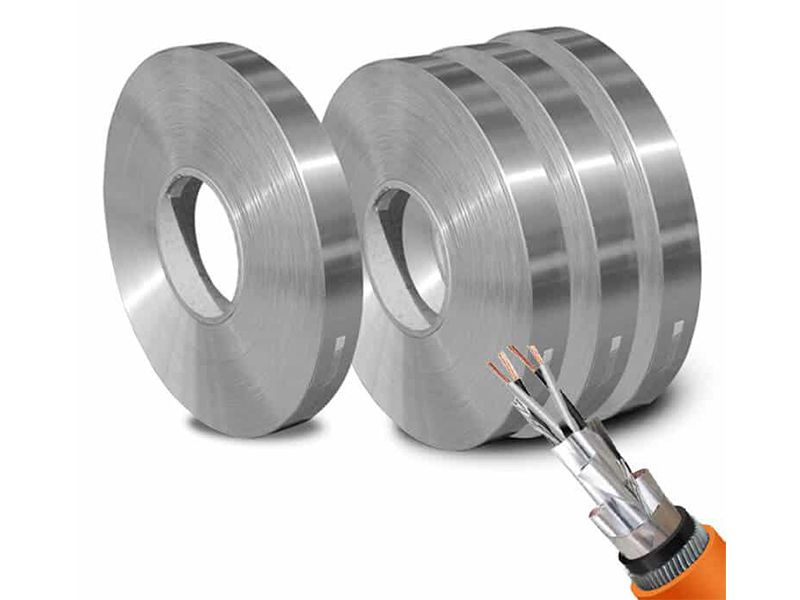
Why Aluminum Strip Is Used in Armoured Cable
Aluminum strip is used in cable armoring because it offers several advantages.
1. Lightweight Protection
Aluminum is lighter than many other metal materials. It can provide protection while helping reduce cable weight.
2. Corrosion Resistance
Aluminum has good corrosion resistance, making it suitable for cable protection applications.
3. Good Formability
Aluminum strip can be wrapped or formed during cable production. Proper temper selection helps improve processing performance.
4. Cost Efficiency
Aluminum is generally cost-effective and suitable for large-scale cable manufacturing.
5. Customizable Specifications
Aluminum strip can be customized by alloy, temper, thickness, width and coil size according to cable production requirements.
Common Applications
Aluminum strip can be used in different cable types, including:
Armoured power cable
Medium voltage cable
Low voltage cable
Control cable
Industrial cable
Cable wrapping layer
Cable protection layer
The specific requirement depends on cable structure and production process.
Choose the Right Aluminum Alloy
Different aluminum alloys offer different mechanical and processing properties.
Common aluminum alloys for cable applications may include:
| Alloy | Feature | Application |
|---|---|---|
| 1050 | Good formability | General cable wrapping |
| 1060 | Good purity and processability | Cable armoring and wrapping |
| 1100 | Good corrosion resistance | General cable applications |
| 3003 | Better strength than pure aluminum | Cable protection |
| 5052 | Higher strength and corrosion resistance | Special cable applications |
| 8011 | Commonly used in foil/strip applications | Cable wrapping or shielding applications |
The final alloy should be selected according to cable design, mechanical performance requirements and customer standards.
Select the Proper Temper
Temper affects hardness, strength and forming ability.
Common tempers may include:
O
H12
H14
H16
H18
Customized temper
For cable armoring, the strip should have suitable strength and formability. If the material is too hard, it may be difficult to process. If it is too soft, it may not provide enough mechanical protection.
The right temper should match the customer's cable production equipment and cable performance requirements.
Confirm Thickness and Width
Thickness and width are key specifications for cable aluminum strip.
When selecting thickness and width, customers should consider:
Cable diameter
Armoring structure
Wrapping method
Production speed
Required protection performance
Equipment compatibility
Stable width tolerance is especially important for continuous cable production. If width variation is too large, it may cause wrapping problems or production instability.
Thickness accuracy is also important because it affects mechanical protection and material consumption.
Surface Quality Requirements
Surface quality can affect both production efficiency and final cable quality.
Good aluminum strip for armoured cable should have:
Smooth surface
Clean surface
No serious scratches
No heavy stains
No oxidation problems
No serious dents or marks
Surface defects may affect cable appearance, wrapping stability or downstream processing.
For export orders, surface protection during packaging and transportation is also important.
Mechanical Performance Requirements
Cable armoring aluminum strip should have suitable mechanical properties.
Important factors include:
Tensile strength
Elongation
Hardness
Formability
Flexibility
Edge condition
Different cable structures may require different mechanical performance. Customers should confirm their technical requirements before placing an order.
Edge Quality and Coil Condition
Edge quality is important for continuous cable production.
Poor edge condition may cause:
Processing difficulty
Equipment wear
Strip breakage
Poor wrapping quality
Surface or cable damage
Good coil condition is also important. The coil should be stable, properly wound and easy to feed into cable production equipment.
Important coil requirements include:
Stable coil winding
No serious deformation
Good edge alignment
Proper coil inner diameter
Safe packaging
Easy handling
Packaging for Export Shipment
Aluminum strip for cable applications is often shipped internationally. Proper packaging helps protect the material during transportation.
Good export packaging should prevent:
Moisture damage
Surface scratches
Coil deformation
Edge damage
Transport movement
Common packaging methods include:
Moisture-proof wrapping
Plastic film protection
Wooden pallet
Wooden case
Edge protection
Strong coil fixing
For B2B buyers, packaging quality is an important part of supplier evaluation.
How to Choose a Reliable Supplier
A reliable aluminum strip supplier for armoured cable should provide:
Suitable alloy and temper options
Custom thickness and width
Stable width tolerance
Good surface quality
Good coil condition
Export packaging experience
Technical communication
Quality inspection support
On-time delivery
Cable manufacturers should provide clear technical specifications and application information to help the supplier recommend suitable material.
Information to Provide When Requesting a Quote
To get an accurate quotation, customers should provide:
Aluminum alloy
Temper
Thickness
Width
Coil inner diameter
Coil weight if required
Surface requirement
Edge requirement
Quantity
Application
Packaging requirement
Destination port or country
The more complete the information, the faster the supplier can provide a suitable quotation.
Choosing aluminum strip for armoured cable requires attention to alloy, temper, thickness, width, surface quality, mechanical properties, edge condition, coil condition and packaging.
A suitable aluminum strip can help improve cable production efficiency, reduce material problems and support stable cable quality.
For cable manufacturers, working with a supplier who understands cable armoring applications is very important.