
What Is Transformer Aluminum Strip?
2026-04-29
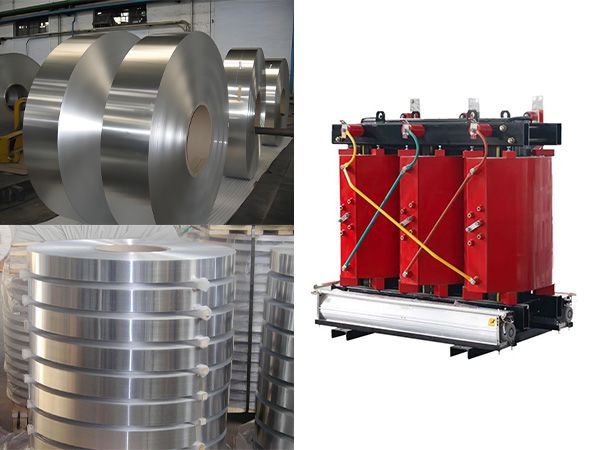
Transformer aluminum strip is a flat aluminum conductor material widely used in transformer winding applications. It is commonly supplied in coil form and processed into specific thickness, width, temper and edge condition according to transformer design requirements.
In transformer manufacturing, aluminum strip is used as a winding conductor material. It can be applied in distribution transformers, power transformers, dry-type transformers and oil-immersed transformers. Because aluminum has good electrical conductivity, light weight and cost advantages, it has become an important material choice for many transformer manufacturers.
For transformer winding, aluminum strip quality is very important. Conductivity, thickness tolerance, width accuracy, surface quality and edge condition can directly affect winding performance, insulation safety and long-term transformer reliability.
What Is Transformer Aluminum Strip Used For?
Transformer aluminum strip is mainly used as a conductive winding material inside transformers. During transformer production, aluminum strip is wound together with insulation materials to form transformer coils.
Typical applications include:
Distribution transformers
Power transformers
Dry-type transformers
Oil-immersed transformers
Electrical winding components
Transformer conductor materials
Compared with round wire or other conductor forms, aluminum strip can provide a larger contact area and is suitable for specific winding designs. It is usually selected according to electrical design, current load, insulation structure and cost requirements.
Why Aluminum Strip Is Used in Transformer Winding?
Aluminum strip is used in transformer winding for several important reasons.
1. Good Electrical Conductivity
Aluminum has good electrical conductivity and can meet many transformer winding requirements. Although copper has higher conductivity, aluminum can still provide reliable electrical performance when properly designed.
2. Lower Weight
Aluminum is much lighter than copper. This helps reduce the overall weight of the transformer, which can be important for transportation, installation and structural design.
3. Cost Efficiency
Aluminum is generally more cost-effective than copper. For many transformer manufacturers, aluminum strip provides a balance between performance and cost.
4. Good Formability
Soft or annealed aluminum strip has good ductility and forming performance. This makes it suitable for winding processes, especially when accurate coil forming is required.
5. Customizable Specifications
Transformer aluminum strip can be produced in different thicknesses, widths, alloys, tempers and edge conditions according to customer requirements.
Common Alloy Grades for Transformer Aluminum Strip
Different aluminum grades may be used depending on conductivity, purity, processing performance and transformer design.
1060 Aluminum Strip
1060 aluminum strip is widely used in transformer applications because of its good conductivity, good formability and stable processing performance. It is one of the common choices for transformer winding.
1070 Aluminum Strip
1070 aluminum strip has higher aluminum purity than 1060 and can offer better electrical performance. It is often used when higher conductivity is required.
1350 Aluminum Strip
1350 aluminum is commonly known as an electrical-grade aluminum material. It is widely used in electrical conductor applications, including transformer winding and other power equipment.
The final grade selection should depend on transformer design requirements, conductivity requirements and customer standards.
Common Temper for Transformer Aluminum Strip
The temper of aluminum strip affects hardness, ductility and winding performance.
For transformer winding, soft aluminum strip is commonly required because it has better flexibility and forming performance.
Common temper options include:
| Temper | Feature | Typical Use |
|---|---|---|
| O Temper | Soft, good ductility | Transformer winding |
| H12 / H14 | Higher strength than O temper | Special requirements |
| Customized Temper | According to customer requirement | Specific applications |
O temper aluminum strip is often preferred for winding applications because it helps reduce cracking, forming difficulty and insulation damage during winding.
Key Specifications of Transformer Aluminum Strip
Transformer aluminum strip is usually customized according to customer drawings or technical requirements.
Common specification items include:
| Item | Description |
|---|---|
| Alloy | 1060, 1070, 1350 or customized |
| Temper | O, H12, H14 or customized |
| Thickness | Customized according to order |
| Width | Customized according to order |
| Surface | Smooth and clean |
| Edge | Slit edge, deburred edge or round edge |
| Coil ID | According to customer requirement |
| Packaging | Export wooden pallet or wooden case |
For transformer applications, dimensional accuracy is very important. Stable thickness and width help ensure consistent winding performance and electrical reliability.
Why Edge Quality Matters
Edge quality is one of the most important factors for transformer aluminum strip.
If the strip edge has sharp burrs, it may damage insulation paper or insulation film during winding. This can increase the risk of insulation failure and reduce transformer reliability.
Common edge types include:
Slit edge
Deburred edge
Round edge
For high-quality transformer winding applications, deburred edge or round edge is often preferred.
Key Quality Requirements
High-quality transformer aluminum strip should meet the following requirements:
Stable electrical conductivity
Accurate thickness tolerance
Accurate width tolerance
Smooth and clean surface
Low burr or round edge
Good ductility
Stable coil condition
Proper export packaging
Material traceability
Before shipment, quality inspection should include surface inspection, dimensional inspection, edge inspection, conductivity testing and packaging inspection.