
Why Aluminum 1350 O Used for Transformer Windings?
2026-08-13
In the material selection system for transformer windings, aluminum 1350-O is not a general grade of ordinary industrial pure aluminum, but rather an electrical-grade aluminum material specifically developed for electrical conductivity applications. It is also an internationally recognized standard grade for high-performance winding substrates in the transformer industry. Unlike the design approach of general-purpose pure aluminum such as 1050 and 1060, which caters to multiple application scenarios, 1350-O aluminum is deeply optimized in terms of chemical composition, heat treatment state, and structural stability, focusing on the conductivity requirements, forming process, and long-term operating conditions of transformer windings. This is the core reason why it has become the mainstream choice in the industry.
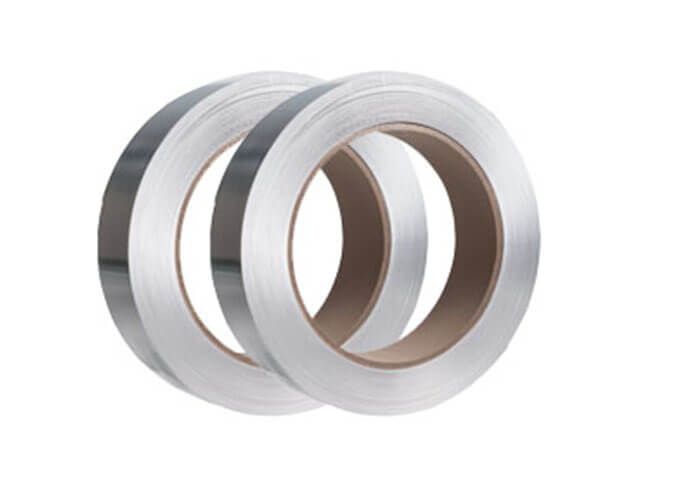
From the perspective of fundamental chemical composition design, the core advantage of 1350 aluminum lies in the precise control of conductive and harmful elements. As an electrical-grade aluminum grade in the ASTM standard system, 1350 aluminum has an aluminum content of no less than 99.50%. Its control focuses not merely on nominal purity, but on strictly limiting the proportion of transition metals such as vanadium, titanium, chromium, and manganese. Through a boronizing refining process, harmful elements dissolved in the aluminum matrix are converted into boride precipitates, significantly reducing electron scattering centers within the crystal lattice. This directional design allows the conductivity of 1350-O state aluminum to consistently reach above 62% IACS, with high-quality batches approaching 63% IACS, significantly higher than the conventional 61% IACS level of ordinary 1060 pure aluminum. For transformer windings, every 1% increase in conductivity corresponds to a decrease in DC resistance of approximately 1.6%, directly reducing load losses. Under the same energy efficiency standard, this allows for a reduction in winding cross-sectional area, or an improvement in energy efficiency level for the same cross-section, demonstrating significant value in energy-saving transformer design.
The fully soft-annealed O temper is crucial for the manufacturing process of 1350 compatible windings. Whether foil-wound or wire-wound, transformer windings require materials with excellent bending and forming capabilities and extremely low residual stress. After complete recrystallization annealing under a protective atmosphere, 1350 aluminum reaches a stable O-state soft state with a fracture elongation exceeding 35% and a Vickers hardness consistently within the HV22~HV28 range, exhibiting minimal performance deviation across the entire winding width. During winding, the material exhibits extremely low springback, allowing for close conformity to the winding skeleton surface, with no gaps or residual stress between turns. This improves the winding fill factor and avoids long-term fatigue cracking caused by stress concentration. Simultaneously, the uniform plasticity significantly reduces the risk of winding cracks, making it particularly suitable for high-speed continuous foil winding processes using wide-width, thin aluminum foil, effectively improving production efficiency and finished product yield.
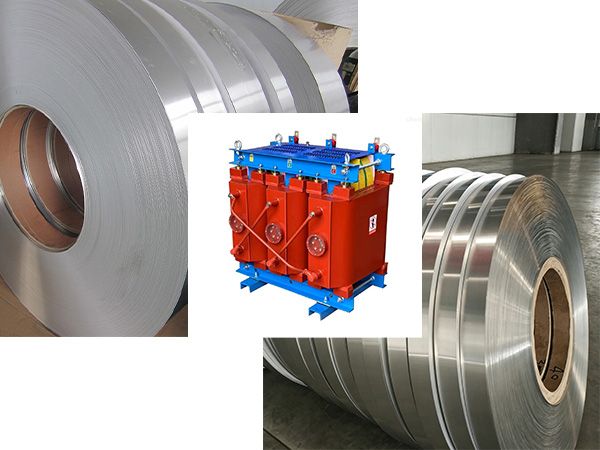
The long-term structural and performance stability is the core guarantee for 1350-O's competence in transformer operating conditions. Transformer windings operate under constant temperature cycling caused by load fluctuations. Ordinary pure aluminum, due to its higher impurity content at grain boundaries, is prone to grain boundary weakening and creep deformation at high temperatures, potentially leading to winding loosening and increased contact resistance over long-term operation. 1350 aluminum, after impurity purification, exhibits purer grain boundaries, more uniform recrystallized grain size, and superior high-temperature softening and creep resistance. Its deformation under temperature cycling is more uniform, reducing the likelihood of structural loosening. Furthermore, the dense and uniform oxide film formed on its surface has good compatibility with transformer oil, epoxy resin, and other insulating media, preventing the precipitation of impurities that accelerate insulation aging and effectively extending the overall service life of the windings.
As a professional exporter of electrical aluminum materials, Haomei Aluminum's 1350-O transformer aluminum strip/foil strictly adheres to international electrical-grade standards. The entire process controls impurity content and annealing uniformity, ensuring dimensional accuracy and surface quality suitable for high-speed winding production lines, meeting the high-performance material selection requirements of transformers of different capacities.
In summary, choosing 1350-O aluminum for transformer windings essentially means selecting a material solution specifically tailored for electrical operating conditions. Its targeted optimization in conductivity, molding process, and long-term reliability makes it irreplaceable in the aluminum winding material system, becoming a superior choice that balances energy efficiency, cost and lifespan.