
Why Round Edge Is Important For Transformer Aluminum Strip?
2026-08-27
Among the various quality indicators of transformer aluminum strip, the edge treatment is often categorized as a "detail." Many buyers focus on conductivity, hardness, and thickness tolerance when selecting transformer winding materials, neglecting the decisive impact of edge morphology on winding electrical reliability and manufacturing yield. Based on years of experience exporting electrical aluminum strip materials, over 60% of winding insulation failures are directly related to partial discharge or insulation damage caused by edge burrs and sharp corners. Edge rounding is not a dispensable post-processing step, but rather one of the fundamental processes ensuring the long-term stable operation of transformers.
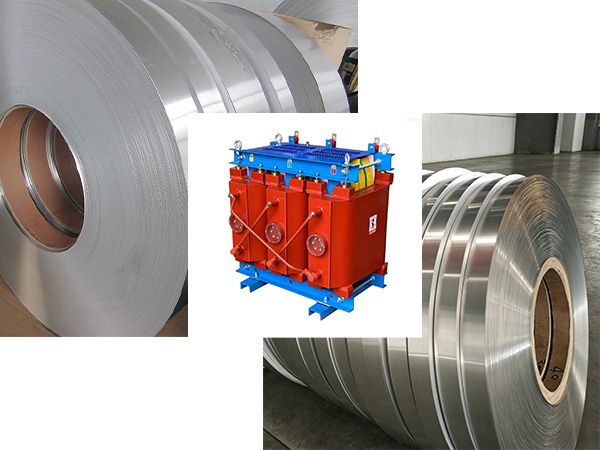
From the underlying logic of electric field characteristics, the core function of round edge is to suppress sharp-point discharge. According to the principle of electrostatics, the electric field strength on a conductor surface is inversely proportional to the radius of curvature; the smaller the curvature, the more concentrated the electric field. After ordinary slitting, aluminum strip has a right-angled cross-section, sometimes even with burrs, resulting in a very small radius of curvature at the edges. The local electric field strength can reach 3 to 5 times that of a planar area. When a working voltage is applied to the winding, a concentrated electric field peak forms at the sharp edges. Once this peak exceeds the breakdown field strength of the surrounding insulation, partial discharge occurs. Sustained partial discharge gradually erodes the insulating paper or epoxy resin, forming electrical treeing channels and ultimately leading to inter-turn insulation breakdown. For windings with voltage levels of 10kV and above, the presence of sharp edges can reduce the partial discharge initiation voltage by more than 30%, severely compressing the insulation design margin. Rounding the edges, by smoothing right-angled edges into rounded arcs, increases the radius of curvature, uniformly distributes the electric field, suppresses the sharp-point discharge effect at its source, increases the partial discharge initiation voltage of the winding, and ensures the long-term reliability of the insulation system.
At the manufacturing process level, rounding the edges directly determines the winding production yield and the rate of latent defects. On high-speed foil winding production lines, the aluminum strip tension can reach tens of Newtons. Untreated slit burrs are hard and sharp, easily tearing the surface of the insulating paper during material feeding, causing latent insulation defects that are difficult to detect with the naked eye. These types of defects are often difficult to detect during routine factory inspections, yet they can become early failure points during equipment operation. Furthermore, after aluminum strips with sharp corners are wound, the edges between turns cannot fit tightly, leaving tiny gaps. This reduces the winding space fill factor and provides a breeding ground for partial discharge. Aluminum strips with round edges have smooth transitions, preventing damage to the insulation layer during feeding. After winding, the inter-turn fit is high, resulting in better overall winding density. It also reduces scratches on the equipment's guide rollers, extends equipment lifespan, and reduces the risk of cuts to operators.
The degree of requirement for rounded edges varies significantly depending on the transformer structure. Dry-type transformers use air or epoxy resin as the insulating medium, lacking insulating oil to fill tiny gaps and suppress discharge. They are extremely sensitive to sharp corners and represent the application scenario with the highest requirements for rounded edges, typically requiring the edge radius to be no less than 1/10 of the strip thickness. In oil-immersed transformers, insulating oil can partially fill the edge gaps, mitigating the tip effect to some extent. However, medium- and high-voltage oil-immersed transformers still require standard rounded edge treatment to prevent edge discharge from accelerating oil quality deterioration during long-term operation. Even for low-voltage, small-capacity transformers, the improved yield resulting from rounded edge treatment still has significant cost value.
In my view, rounded edge treatment is a typical example of a "low-cost, high-reliability" project. Precision rounded edge treatment only increases processing costs by about $30-50 per ton, but can significantly reduce the risk of winding insulation failure. Many customers choose ordinary slit aluminum strip to reduce procurement costs, but ultimately pay a price far exceeding the material price difference due to excessive winding partial discharge or early failures. For the export market, the quality of rounded edges directly reflects the supplier's professionalism and is an entry threshold into the high-end transformer supply chain.
Haomei Aluminum supplies transformer aluminum strips, all of which undergo precision edge rounding using specialized trimming equipment. The edge curvature is uniform and controllable, free of burrs and flash. Customized edge processing solutions can be provided based on customer voltage levels and insulation systems, ensuring the electrical performance and manufacturing yield of the windings from the smallest details. In short, the value of edge rounding lies in the unseen electric field and process details; it directly relates to the core reliability and service life of the transformer and is a key indicator of transformer aluminum strip quality, rather than an optional value-added service.